
Life-sized interactive installations
The installations we designed and built for Madlabs, brought into your school, indoors or outdoors, with grade-wise activity plans so that the building itself becomes a place to observe, question, tinker and discover.
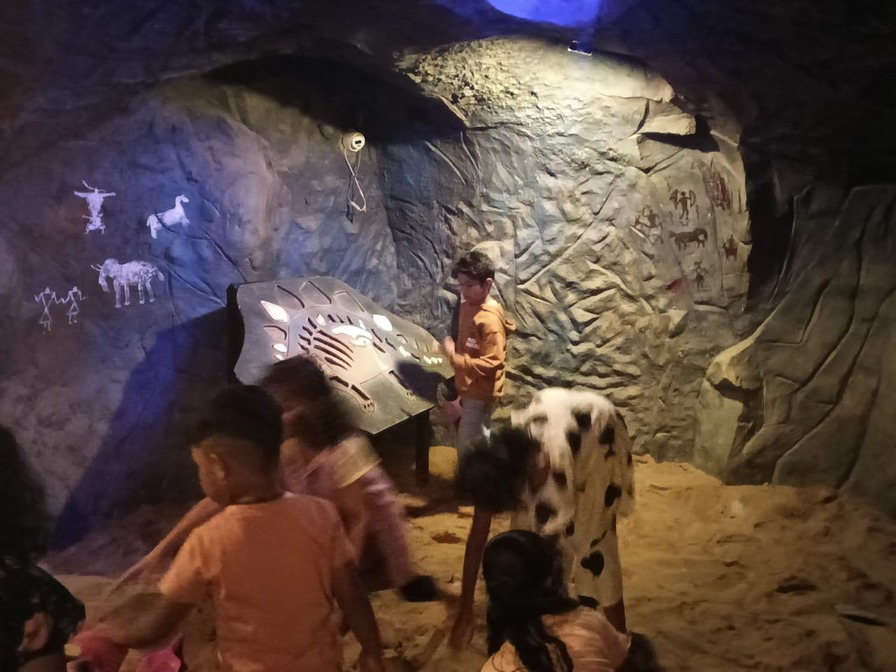
What are the installations?
One way to develop the attitude of exploration is by creating an environment that encourages it. Madlabs, the space we designed and developed in Bengaluru, is a self-directed learning space that combines the merriment of a playground with the scholarship of a museum. It has had around 2.5 lakh visitors in four years, and its biggest achievement is that most visitors leave with more questions than answers.
A school corridor, a courtyard or a playground can do the same. We bring the same installations, at school scale, into your building, each with grade-wise learning objectives and activity plans.
How it works
Every installation is designed to do five things at once.
Fun and play
A child comes to it because it looks like fun.
Self-exploration
It can be worked without instructions, repeated as often as a child likes, and got wrong safely.
A trigger for the facilitator
It gives a teacher a question to ask and a place to stand while the class finds out.
Opportunities to learn and develop skills
Observation, prediction, testing and pattern-finding, tied to a concept in the curriculum.
Engaging families
Parents and siblings can join the exploration, so the learning journey does not stop at the school gate.
Installations are chosen from a menu of around 26 and matched to your building and your grades. They come in five kinds: wall-mounted, floor, ceiling, tabletop and large freestanding. Grouped by what children explore at them:
Mechanics and balance
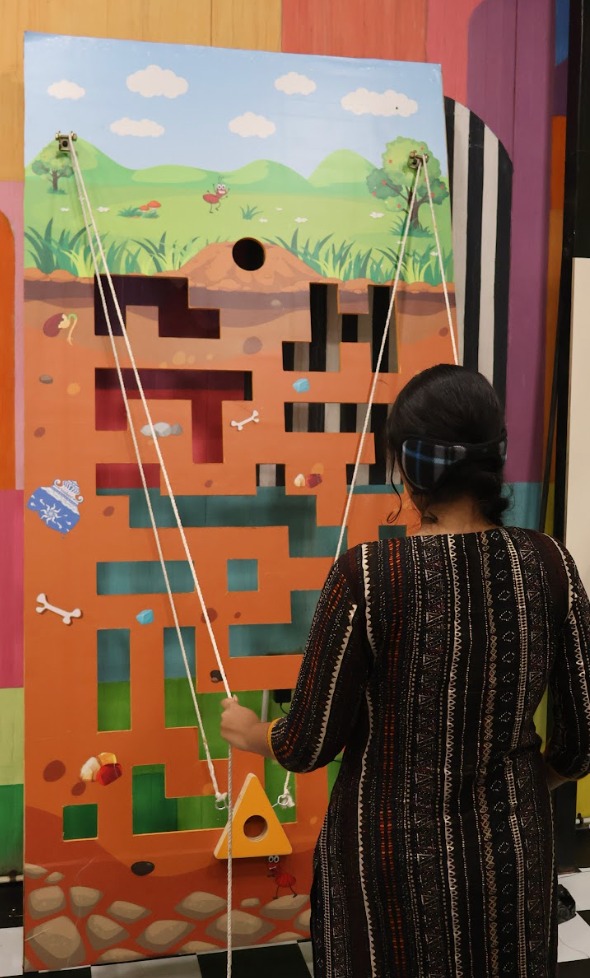
Children turn, load, shake and stack, and meet force, torque, mechanical advantage and stability with their hands. A gear wall and a magnetic gear wall (Grades 1 to 10); a lever balance; a balancing plate, with and without blocks; an earthquake table that tests structures children have built (Grades 1 to 8); a construction set of oversized nuts, bolts and beams; a life-size Tower of Hanoi and Katamino; a pipe-and-ball wall where the aim is to bring the ball down as slowly as possible.
Maths on the walls and floor
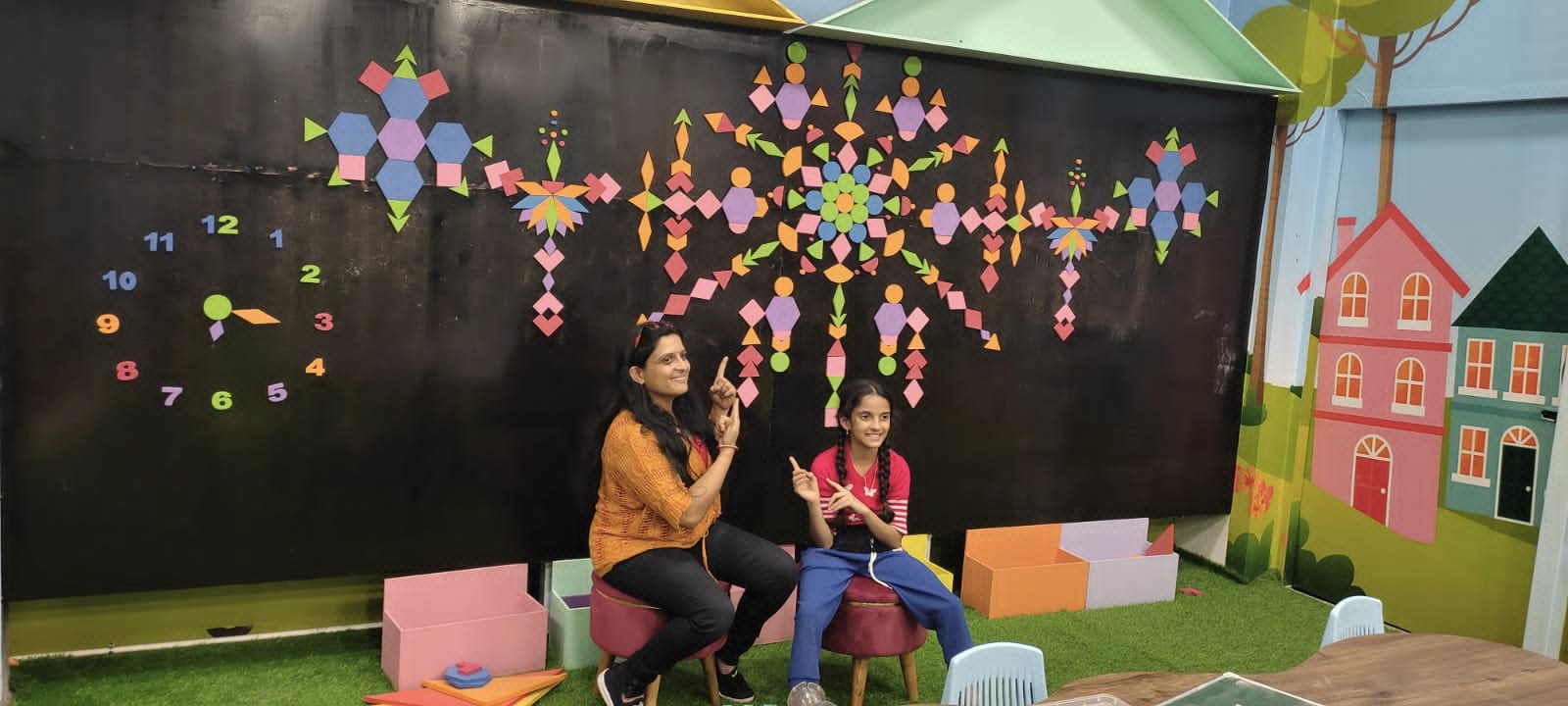
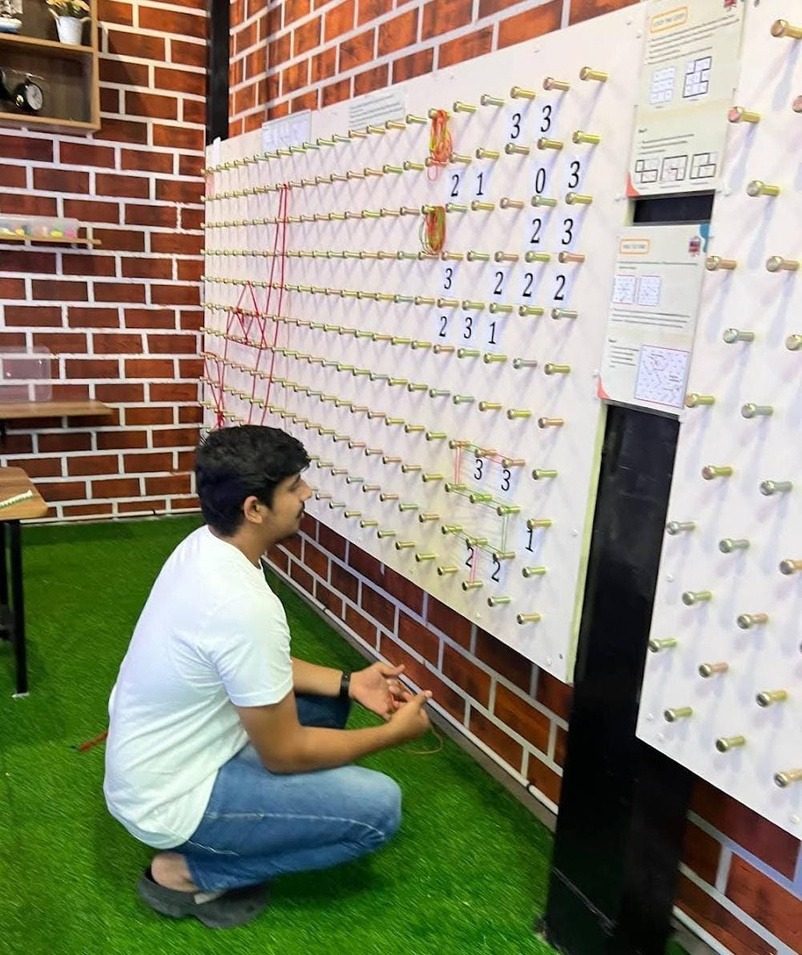
Shapes, patterns and numbers large enough to walk on. A geoboard wall of elastic bands on pegs for angles, symmetry, perimeter and area (Grades 1 to 10); a magnetic wall of foam shapes, from puzzles to art; a floor-sized snakes and ladders grid with a dice (K to 5); a chessboard on the floor; the digits of pi spiralling outward across the ceiling (Grades 1 to 10); an ancient game corner of traditional board games from many cultures.
Air and water
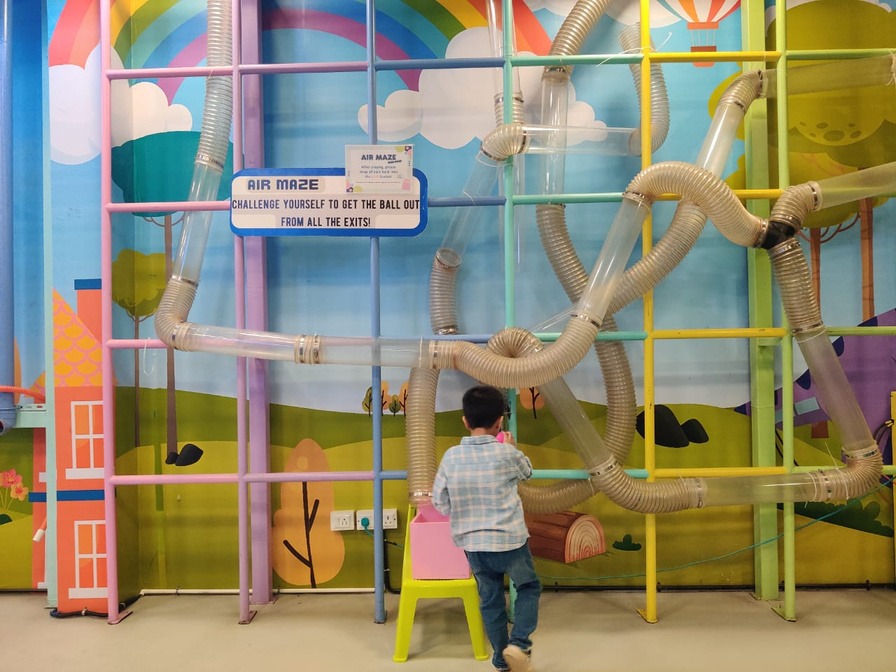
Moving air and moving water made visible. An air maze where a ball is steered through a labyrinth on a stream of air; a parachute blower for testing parachutes of different sizes, shapes and materials in an upward stream; a Bernoulli two-player game; duck racing through handpumps along a water channel; a dam model with gates and a turbine.
Light, sound and illusion
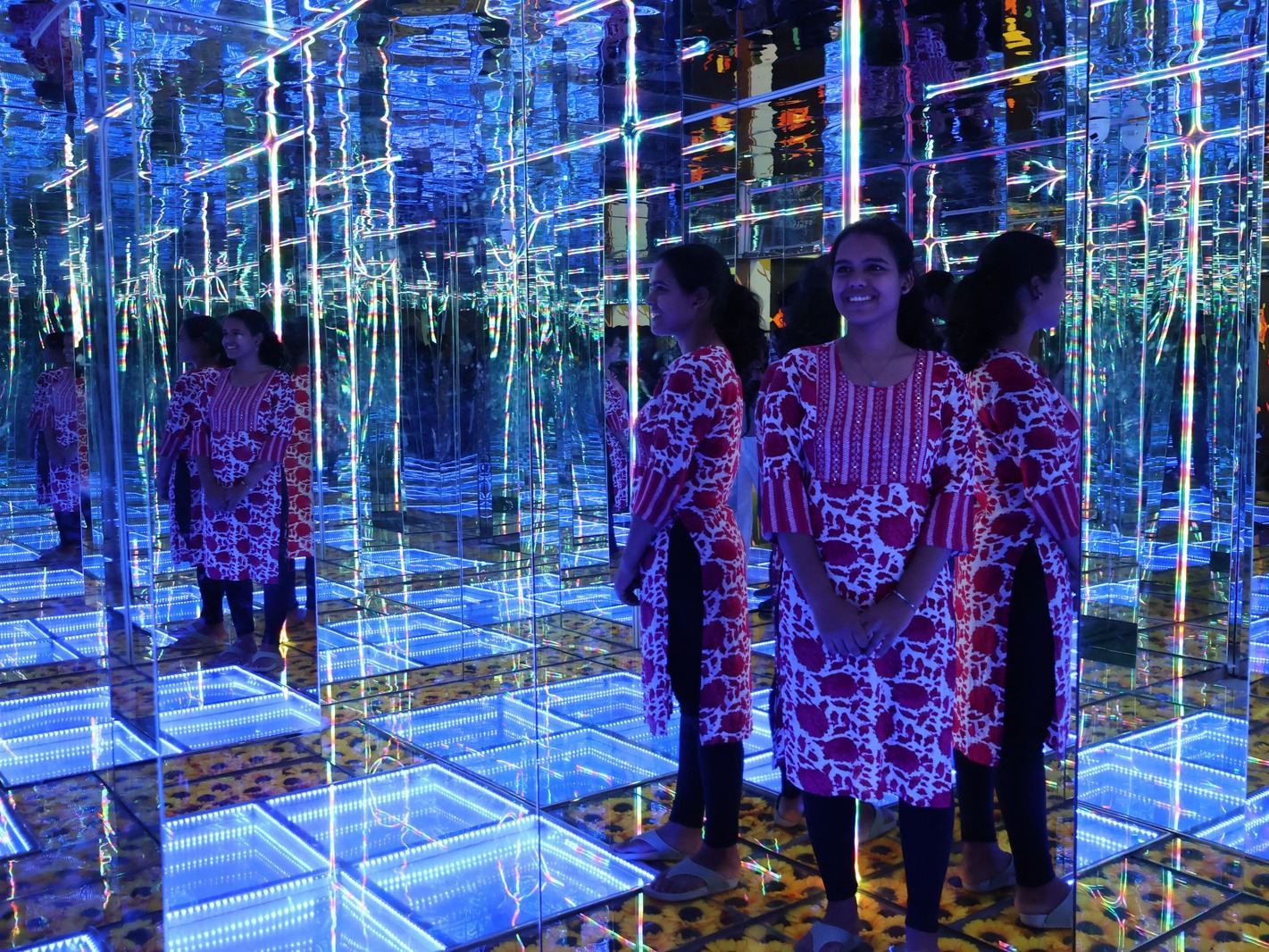
Children find out that shadows are not always black and that a mirror can go on forever. Multi-coloured shadows from RGB lights (K to 10); a mirror door of facing mirrors producing infinite reflections (K to 8); a mirror maze; an echo pipe maze; Sa-Re-Ga-Ma pipes exploring pitch and sound (K to 10); a glow wall that answers a purple laser and ignores a red one; a shadow theatre; a thermochromic wall that changes colour under a warm hand; the dwarf's chair, which makes a person look tiny.
Energy and gravity
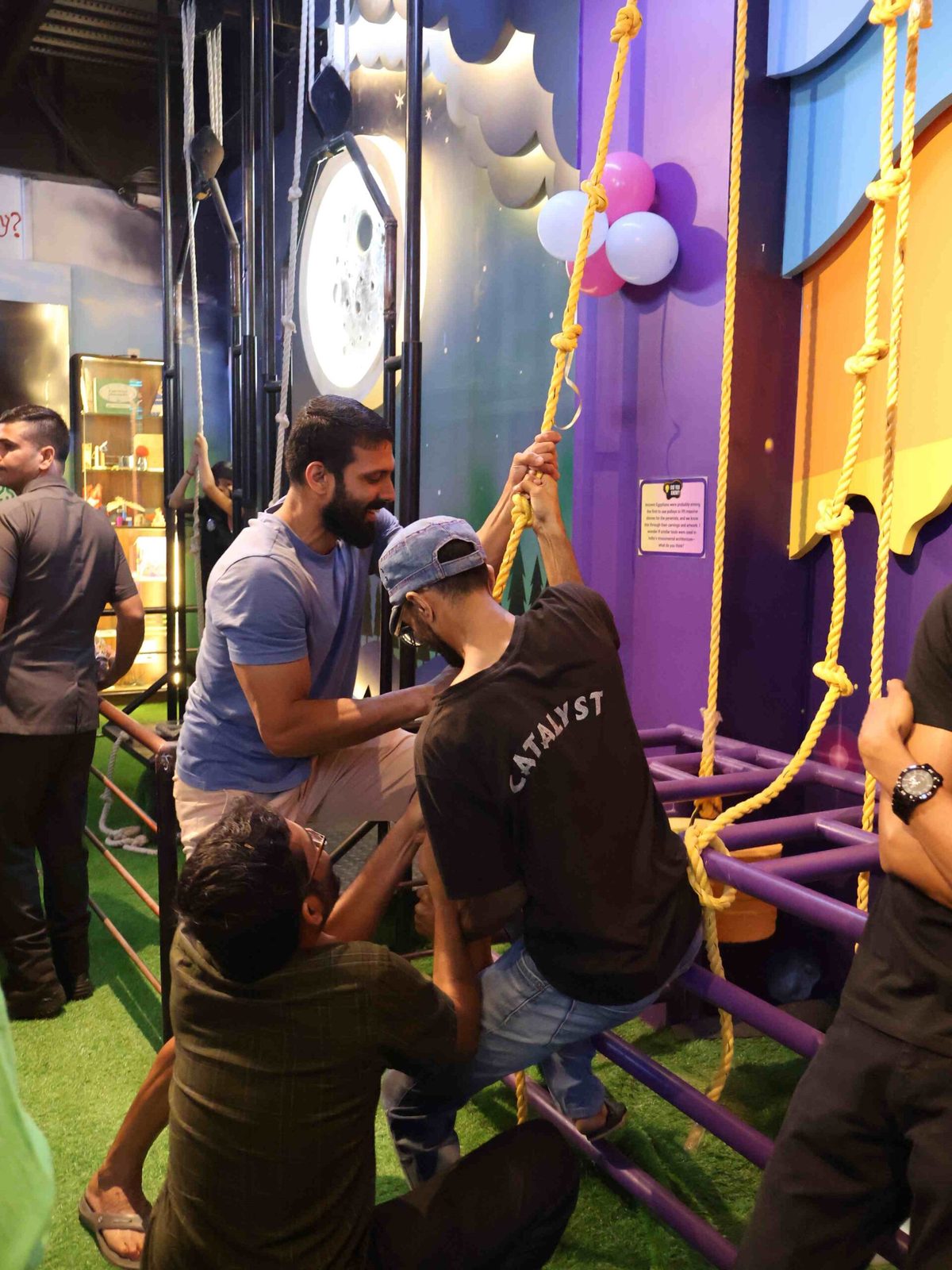
Effort turned into light, and weight that changes from planet to planet. A rotating wheel that lights LEDs faster the harder it is spun; a cycle-powered butterfly; the cosmic lift, pulleys that simulate lifting the same weight on different planets (Grades 1 to 10); a self-lifting pulley system where a child compares hoisting themselves on the Moon and on Earth.
Discovery, and the outdoors
Slow looking, indoors and out. An X-cave where children excavate and assemble a dinosaur skeleton from a sandpit; a digital microscope that projects a fingerprint or a leaf onto a large screen; a giant bubble to stand inside. Outside: a sundial, a shadow pole, a rain gauge, a large pendulum, pendulum patterns, mud houses that compare the temperature of cement, mud and mud with flowing water, concave and convex mirrors, and a walk-in "mitticool" refrigerator.
What your school receives
Seed2Sapling provides
- Space design and materials set-up, indoor or outdoor
- Installations selected from the menu to suit your building and grade range, built by the team that built Madlabs
- Transportation and installation of all the major pieces
- Grade-wise learning objectives and activity plans for each installation, with two to six ideas per piece shared with teachers
- Teacher orientation at your school: a two to three day session around the installations, with one or two follow-up visits of a day each
- 4 to 6 follow-up sessions with teachers through the year on the use of the installations
- Designs for any stickering and floor or wall graphics
The school provides
- Paint, furniture and plaster work, arranged locally
- Printing of stickering and graphics from our designs
- Electrical connections where an installation needs one
- Support structures for wall-mounted pieces, to our specification
- The corridor, courtyard or playground where the pieces will live
We will also suggest our ideas for all of the above. Scope is agreed first: a corridor of wall pieces and a full outdoor set are different projects.
Putting it in place
Most schools start with wall and floor pieces in circulation space, because those need no timetable and no room. Larger freestanding installations follow once teachers are using the first set, and the outdoor pieces usually come as a second or third phase.
The magnetic wall and the geoboard wall sit naturally along the corridor outside a Math Lab, and a Tinker Den gives children a place to build their own versions of what they have played with.
A school that wants to see the work first can visit Madlabs.
From the classroom
"Children ask a lot of questions but as they grow, people around them can no longer satisfy or answer their questions. So society finds ways and means to suppress the ability to ask questions. Indian students are very obedient and follow procedures, but if they are asked to do something on their own, they are not ready to venture into that ..."
Let's talk about what your school needs
Partner with usAlso worth looking at: Tinker Den · Math Lab · Madlabs